



















How Overthinking Is Destroying Your Peace & How to Stop It
Discover how overthinking silently steals your peace and learn simple, effective ways to calm your mind and regain mental clarity.

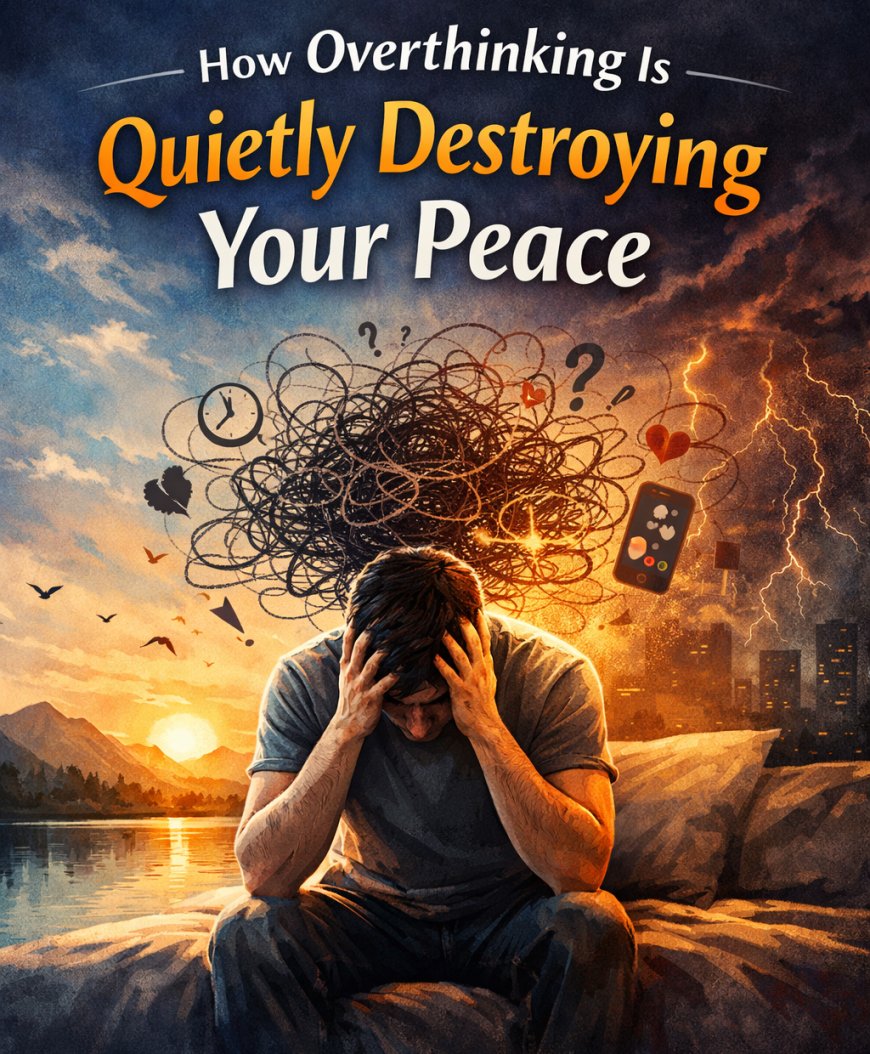
How Overthinking Is Quietly Destroying Your Peace
Introduction
Overthinking has become one of the most common mental struggles in modern life. In a world filled with constant notifications, endless choices, and rising expectations, the mind rarely gets a moment of rest. While thinking is essential for decision-making and problem-solving, overthinking goes far beyond usefulness. It silently drains your peace, steals your happiness, and keeps you trapped in mental loops that never lead to real solutions.
This article explores how overthinking affects your mental well-being, why it happens, and—most importantly—how you can break free from it.
What Is Overthinking?
Overthinking is the habit of repeatedly analyzing the same thoughts, situations, or conversations without reaching a conclusion. It often involves:
-
Replaying past mistakes
-
Worrying excessively about the future
-
Imagining worst-case scenarios
-
Questioning your own decisions
Instead of solving problems, overthinking creates emotional exhaustion and anxiety.
How Overthinking Quietly Destroys Your Peace
1. It Creates Constant Mental Noise
Overthinking keeps your mind busy all the time. Even during moments of rest, your thoughts race, leaving you mentally tired and emotionally drained. This constant noise prevents inner calm and clarity.
2. It Fuels Anxiety and Stress
When you overthink, you focus on what could go wrong rather than what is happening now. This triggers stress responses in the body, increasing anxiety, restlessness, and even physical symptoms like headaches or poor sleep.
3. It Steals Your Joy
Overthinkers struggle to enjoy the present moment. Instead of feeling happiness, they analyze it—wondering how long it will last or what might ruin it. Slowly, joy fades and peace becomes rare.
4. It Weakens Self-Confidence
Overthinking makes you doubt yourself. You question your choices, your words, and your worth. Over time, this self-doubt lowers confidence and makes decision-making harder.
5. It Disrupts Sleep and Focus
Overthinking often becomes louder at night. Racing thoughts make it difficult to sleep, leading to fatigue and poor concentration during the day—creating a cycle that’s hard to break.
Why Do We Overthink?
Overthinking usually stems from:
-
Fear of failure or judgment
-
Past emotional trauma
-
Perfectionism
-
Lack of control over outcomes
-
Constant comparison on social media
Understanding the root cause is the first step toward healing.
Signs You Are Overthinking
-
You replay conversations repeatedly
-
You struggle to make simple decisions
-
You assume the worst without evidence
-
You feel mentally exhausted even without physical work
-
You have trouble relaxing
If these signs feel familiar, your mind may be stuck in overthinking mode.
How to Stop Overthinking and Protect Your Peace
1. Practice Mindfulness
Focus on the present moment. Simple breathing exercises or short meditation sessions can calm racing thoughts and bring mental clarity.
2. Limit Negative Thought Patterns
When a negative thought appears, ask yourself: Is this helpful or just fear talking? Challenge irrational assumptions with logic.
3. Set Mental Boundaries
Give your mind a “thinking time.” Outside of that, redirect your focus to productive or calming activities.
4. Reduce Digital Overload
Too much screen time increases comparison and mental stimulation. Taking breaks from social media helps restore inner peace.
5. Take Action Instead of Overanalyzing
Action breaks the cycle of overthinking. Even small steps create progress and reduce mental pressure.
The Power of Letting Go
Peace doesn’t come from controlling everything—it comes from accepting uncertainty. Learning to let go of what you cannot control frees your mind and restores emotional balance.
Conclusion
Overthinking may feel harmless, but over time, it quietly destroys your peace, confidence, and happiness. The good news is that you can regain control. By becoming aware of your thoughts, practicing mindfulness, and choosing action over fear, you can break free from mental chaos and rediscover calm.
Remember: Your mind should work for you, not against you
What's Your Reaction?
 Like
0
Like
0
 Dislike
0
Dislike
0
 Love
0
Love
0
 Funny
0
Funny
0
 Angry
0
Angry
0
 Sad
0
Sad
0
 Wow
0
Wow
0