












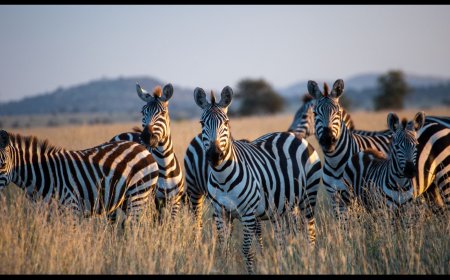




ZOOLOGY:EVOLUTIONARY PRESPECTIVE
Zoology through an evolutionary lens explores how animals have adapted and diversified over time. It helps us understand the origin, structure, and behavior of species in relation to their evolutionary history.



An Evolutionary Perspective — Understanding Animal Life Through Evolution
Introduction
Zoology is the branch of biology that focuses on the scientific study of animals — their anatomy, physiology, behavior, development, classification, and ecology. But to fully understand why animals are the way they are, zoologists turn to an overarching concept: evolution. An evolutionary perspective in zoology explains how animals originated, adapted, diversified, and continue to change over time. This perspective not only gives insight into biological form and function but also connects all living beings through shared ancestry and genetic inheritance.
In this article, we explore the evolutionary principles that shape animal life, how evolution is studied, and why understanding evolution is essential for modern biological science.
What Is Evolution?
Evolution refers to the change in the genetic makeup of populations over generations. It is not simply change, but change that arises from biological mechanisms such as natural selection, mutation, genetic drift, and gene flow. The most influential and widely accepted explanation for how evolution works is Charles Darwin’s theory of natural selection.
Darwin proposed that
- Individuals in populations vary in traits.
- Some variations enhance survival and reproduction.
- Favorable traits become more common over generations.
- Species gradually change, and new species may emerge.
Why Evolution Matters in Zoology
Evolution provides the framework for interpreting all aspects of animal biology. Instead of memorizing isolated facts about animal form and function, students and researchers use evolutionary theory to:
- Explain similarities and differences among species.
- Understand the adaptive significance of anatomical features.
- Interpret behavior patterns in ecological and evolutionary context.
- Trace the origin and diversification of animal groups.
From insect wings to mammalian brains, from fish scales …
- Transitional fossils like Archaeopteryx, which shows both reptilian and avian features.
- Fossils of early tetrapods (four‑limbed vertebrates) that link fish to amphibians.
- Progressive changes in horse fossils showing increasing tooth size and changes in limb structure.
Fossil evidence supports the idea that modern species evolved from earlier, simpler ancestors and that major evolutionary transitions occurred over time.
---
Comparative Anatomy and Homology
Comparative anatomy examines the structural similarities and differences between organisms. When two species share anatomical features due to common ancestry, those features are called homologous structures.
Examples:
- The forelimb bones of humans, whales, birds, and cats have similar underlying structures but different functions.
- The vertebrate eye shares basic organization across fish, birds, and mammals.
Homologous features reflect common evolutionary origins, even when modern functions differ. These patterns help zoologists reconstruct evolutionary relationships.
Embryology and Developmental Biology
Embryology — the study of early development — provides clues about evolutionary relationships. Many animals show similar developmental patterns early in life, reflecting ancestral connections.
For example:
- Vertebrate embryos share features like pharyngeal pouches and tail structures.
- Insects and crustaceans follow similar segmentation patterns.
These similarities suggest that different animal groups share conserved developmental genes, implying deep evolutionary links.
Molecular Biology: DNA Evidence
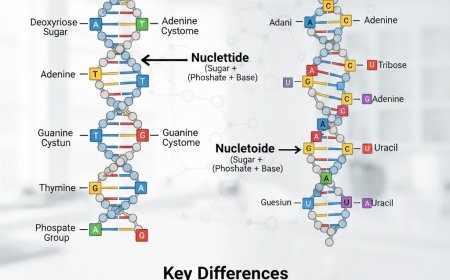
With the advent of molecular biology, scientists can compare DNA and protein sequences across species. Genetic similarities offer some of the strongest evidence for evolution.
Key points:
- Closely related species have more similar DNA sequences.
- Humans share about 98–99% of DNA with chimpanzees, highlighting close evolutionary relationships.
- Molecular clocks use mutation rates to estimate when two species diverged.
Molecular data corroborate fossil and anatomical evidence, strengthening our understanding of evolutionary history.
Natural Selection and Adaptation
At the heart of evolution is natural selection — the process by which organisms with traits better suited to their environment survive and reproduce more successfully. Over generations, these traits become more common.
Examples:
- Peppered moths in England changed color based on pollution levels.
- Darwin’s finches on the Galápagos Islands show beak variations adapted to specific food sources.
- Cichlid fish in African lakes exhibit diverse jaw structures suited to different feeding niches.
Adaptations can be structural (e.g., camouflage), physiological (e.g., temperature regulation), or behavioral (e.g., migration patterns).
---
Speciation: How New Species Arise
Speciation is the process by which new species form. It often begins when populations of a species become isolated — geographically, ecologically, or behaviorally — and accumulate genetic differences over time.
Processes include:
- Allopatric speciation: Geographic separation leads to divergence (e.g., islands).
- Sympatric speciation: New species emerge without geographic separation, often…
- When did major groups diverge?
- How do traits evolve within lineages?
Cladistics, a method within phylogenetics, groups organisms based on shared derived characteristics, clarifying evolutionary history.
Human Evolution: A Case Study
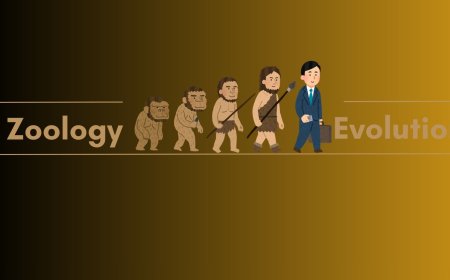
Human evolution is one of the most studied examples of evolutionary change. Fossils such as Australopithecus afarensis (e.g., “Lucy”) and early Homo species show a gradual increase in brain size, changes in posture, and tool use.
Genetic evidence further clarifies:
- Modern humans (Homo sapiens) share ancestry with other hominins like Neanderthals.
- Mitochondrial DNA traces maternal lineages and migration patterns.
Human evolution illustrates how evolution shapes anatomy, behavior, and cognition over long periods.
---…
Misconceptions About Evolution
Evolution is often misunderstood. Common misconceptions include:
- “Evolution is just a theory.” (In science, a theory is a well‑supported explanation.)
- “Humans evolved from monkeys.” (Humans and monkeys share common ancestors.)
- “Evolution happens to individuals.” (It occurs in populations over generations.)
Clarifying these points helps science education and public understanding.
Conclusion
The evolutionary perspective is the cornerstone of zoology. It explains why animals have particular forms, functions, and behaviors, and how they adapt to changing environments. By integrating evidence from fossils, anatomy, embryology, and molecular biology, evolutionary theory provides a unified framework for understanding the diversity of animal life.
Whether studying insects in a forest, fish in the ocean, or humans in the city, zoologists use evolutionary thinking to reveal connections that span millions of years. Evolution is not just a historical process — it is ongoing, shaping life in real time.
What's Your Reaction?
 Like
0
Like
0
 Dislike
0
Dislike
0
 Love
0
Love
0
 Funny
0
Funny
0
 Angry
0
Angry
0
 Sad
0
Sad
0
 Wow
0
Wow
0