











GASTROINTESTINAL SYSTEM ANATOMY AND PHYSIOLOGY COMPLETE LECTURE

GASTROINTESTINAL SYSTEM
ANATOMY AND PHYSIOLOGY COMPLETE LECTURE
Introduction
The gastrointestinal system is also called the digestive system. It is a long muscular tube that starts from the mouth and ends at the anus. Its function is to receive food, break it down into smaller nutrients, absorb these nutrients, and remove waste from the body. The GI system is made of different organs arranged in a proper order. Each organ has its own structure and also performs a specific function that is important for digestion.
General Anatomy of the GI Tract
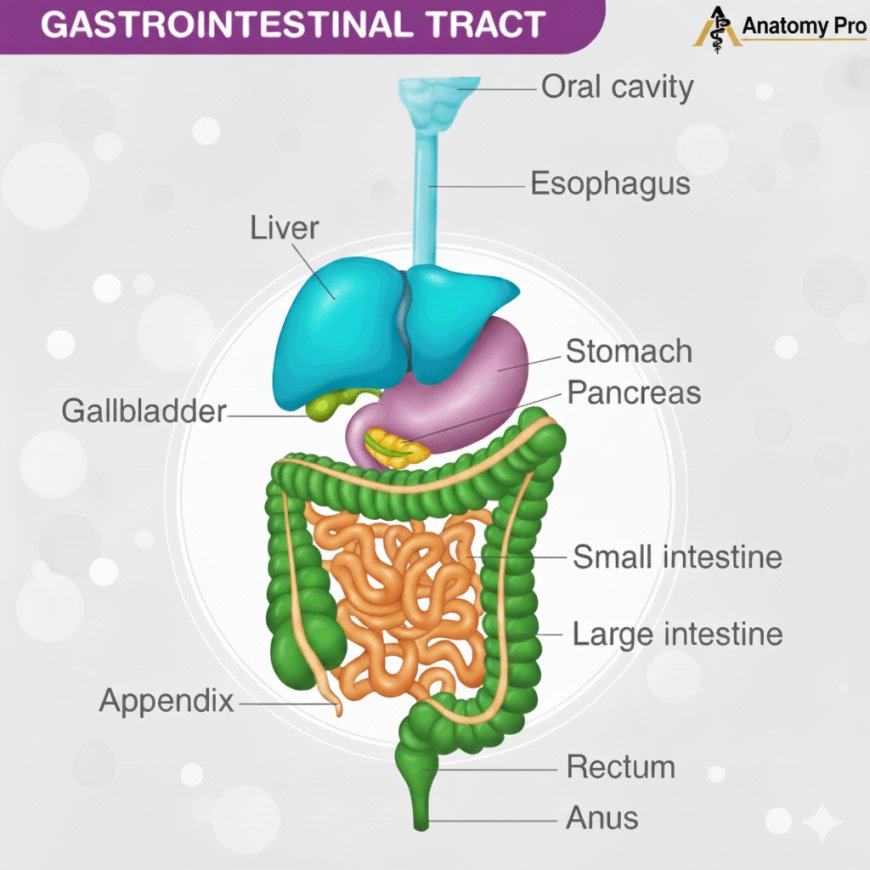
The gastrointestinal tract includes the mouth, pharynx, esophagus, stomach, small intestine, large intestine, rectum, and anus. The accessory digestive organs such as the salivary glands, liver, gallbladder, and pancreas also help in the process of digestion.
Histological Layers of the GI Tract
From esophagus to rectum, the wall of the GI tract contains four main layers.
Mucosa. This is the inner layer which contains epithelium, lamina propria, and muscularis mucosa. It is responsible for secretion, absorption, and protection.
Submucosa. This layer contains blood vessels, lymphatics, and nerves. It also contains glands in some parts.
Muscularis externa. This layer contains smooth muscle arranged in circular and longitudinal layers. It helps in peristalsis and mixing movements.
Serosa or adventitia. This is the outer covering which protects and anchors the organ.
Anatomy and Physiology of Each Organ
Mouth
The GI tract begins at the mouth. The mouth contains teeth, tongue, and salivary glands. Teeth break the food into small pieces. The tongue helps in swallowing and taste. Salivary glands secrete saliva which contains enzymes like amylase that start the digestion of carbohydrates. Physiology of the mouth includes chewing, mixing of food with saliva, and beginning of starch digestion.
Pharynx
The pharynx is a muscular tube that connects the mouth to the esophagus. Its main function is to pass the swallowed food (called bolus) toward the esophagus. It also prevents food from entering the airway during swallowing.
Esophagus
The esophagus is a long muscular tube about twenty five centimeters long. It carries food from the pharynx to the stomach. It has upper and lower esophageal sphincters that control the entry and exit of food. Its major physiology is peristalsis, which is the wave like movement that pushes food downward.
Stomach
The stomach is a J shaped muscular organ located in the upper left abdomen. It has four regions: cardia, fundus, body, and pylorus. The inner lining of the stomach contains gastric glands that secrete gastric juice.
Gastric juice contains hydrochloric acid, mucus, intrinsic factor, and enzymes like pepsin.
The physiology of the stomach includes mechanical digestion by churning movements and chemical digestion of proteins by pepsin. Hydrochloric acid kills bacteria and provides acidic environment for enzymes. The stomach turns food into a semi liquid mixture called chyme.
Small Intestine
The small intestine is the major site of digestion and absorption. It has three parts which are duodenum, jejunum, and ileum. The inner lining contains villi and microvilli which increase the surface area for absorption.
The duodenum receives bile from the liver and gallbladder and digestive enzymes from the pancreas. These substances help in digestion of fats, carbohydrates, and proteins.
Jejunum and ileum mainly absorb nutrients such as glucose, amino acids, fatty acids, vitamins, minerals, and water.
Large Intestine
The large intestine includes cecum, colon, rectum, and anus. Its function is to absorb water, electrolytes, and form solid waste (feces). The colon contains beneficial bacteria that synthesize vitamin K and some B vitamins. Movement through the colon is slow, allowing maximum water absorption.
Rectum and Anus
The rectum stores feces until defecation. The anus contains two sphincters, internal and external, which control the release of feces from the body.
Accessory Digestive Organs
Liver
The liver is the largest gland in the body. It produces bile which is important for fat digestion. It also detoxifies harmful substances, stores vitamins and minerals, and regulates blood glucose.
Gallbladder
The gallbladder stores and concentrates bile. When fatty food enters the duodenum, the gallbladder contracts and releases bile through the bile duct.
Pancreas
The pancreas has both endocrine and exocrine functions. The exocrine part secretes digestive enzymes like amylase, lipase, and proteases. These enzymes help in digestion of carbohydrates, fats, and proteins. It also secretes bicarbonate which neutralizes acidic chyme.
Overall Physiology of Digestion
Ingestion. Taking food into the mouth.
Propulsion. Swallowing and peristalsis move food along the GI tract.
Mechanical digestion. Chewing in the mouth and churning in the stomach.
Chemical digestion. Enzymes break complex food molecules into simple forms.
Absorption. Nutrients are absorbed mainly in the small intestine and water in the large intestine.
Defecation. Removal of solid waste from the body.
What's Your Reaction?
 Like
0
Like
0
 Dislike
0
Dislike
0
 Love
0
Love
0
 Funny
0
Funny
0
 Angry
0
Angry
0
 Sad
0
Sad
0
 Wow
0
Wow
0